
Egypt’s Parliament Wants Control Over Monasteries Along the Holy Family Trail
A draft law backed by 60 MPs threatens to strip the Coptic Church of stewardship over the Holy Family Trail — and the world needs to pay attention.
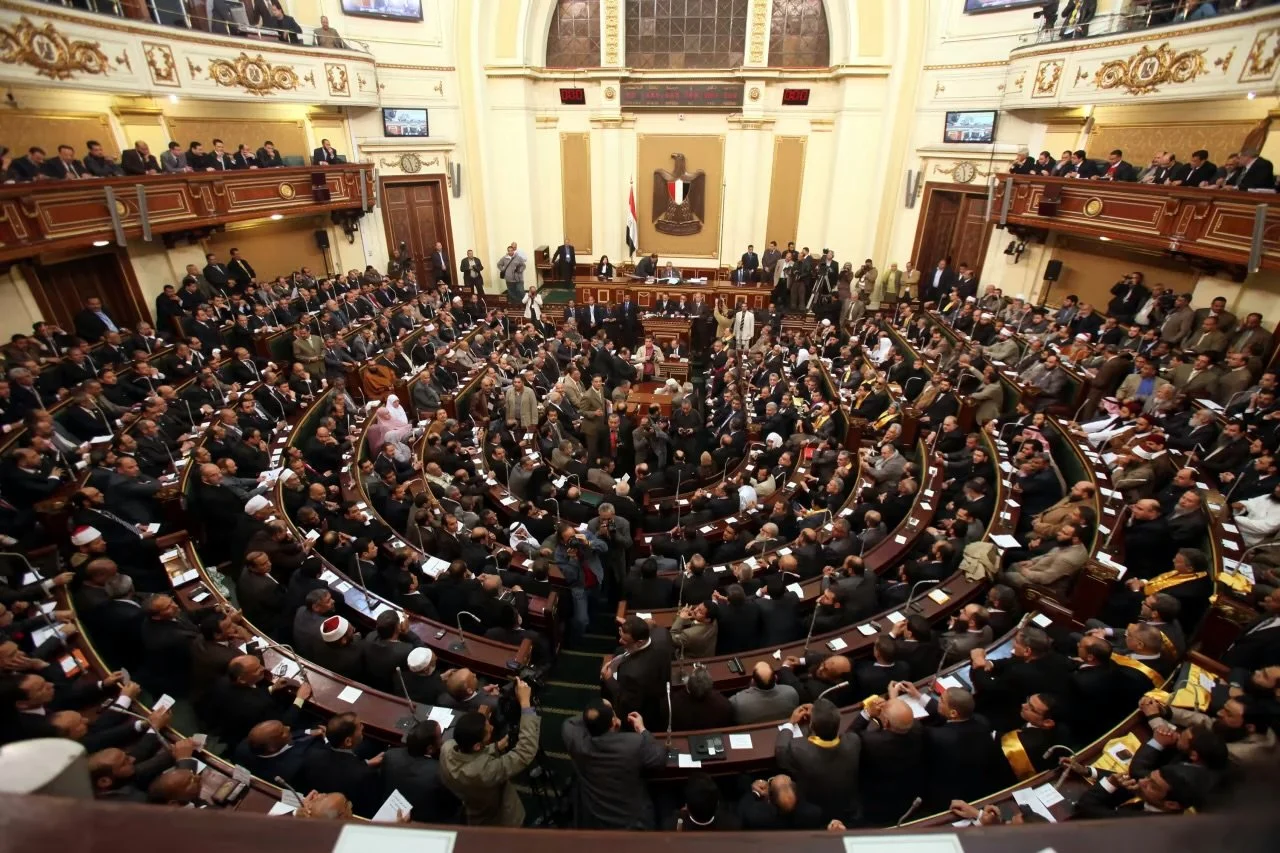
Egypt's Parliament, Cairo
Look at a map of Egypt and trace the Nile southward. Along that path — from the Delta to Upper Egypt — sit some of the oldest continuously active Christian sites on earth. Monasteries carved into cliffsides. Churches built over caves where, according to tradition, the Holy Family sought refuge from Herod's soldiers. Places that have been prayed in, tended, and passed down from generation to generation without interruption for over two thousand years.
The Coptic Church did not inherit these sites from a government. No administration built them. No tourism authority kept them alive through Roman persecution, Islamic conquest, or the slow erosion of centuries. The Coptic people did. With their hands, their prayers, and an unbroken devotion that outlasted every empire that tried to extinguish it.
That is the inheritance now at risk.
What the Law Proposes
A draft law currently backed by 60 members of Egypt's Parliament proposes the creation of a new state authority — operating under the Prime Minister — with sweeping powers over the lands, facilities, and revenues of every site along the Holy Family Trail.
In practice, this means the following:
Sites long under the Church's care could see control transferred to a state body.
Entrance fees could be imposed on sanctuaries where pilgrims have always entered freely.
Commercial partnerships could be formed that answer to revenue targets rather than to faith.
And the monks and clergy who have tended these places across centuries could find themselves gradually distanced from the very sanctuaries they inhabit.
None of this has been proposed in consultation with the Coptic Orthodox Church.
The institution that preserved these sites was not invited to the table where their future is being decided.
This Is Not a Property Dispute
It would be easy — and wrong — to read this as a bureaucratic argument about land ownership. It is not.
These monasteries are not museums. They are not heritage sites in the way that term is usually understood — preserved, roped off, visited on school trips. They are active places of worship. Liturgies are sung in them every week. Pilgrims travel from across Egypt and around the world to pray in them. Monks live in them. They are alive in the fullest sense of the word.
To transfer their governance to a state authority is not administrative reform. It is the removal of a living community from the home it never left.
The Contradiction Egypt Cannot Ignore
Here is what makes this particularly difficult to accept: Egypt promotes the Holy Family Trail to the world as sacred heritage. It appears in international tourism campaigns. It is being submitted for UNESCO World Heritage status. The Egyptian state understands the value of what exists along that trail.
Yet the institution that created that value — that preserved these sites through blood, prayer, and two thousand years of unbroken devotion — was never consulted about their future.
You cannot celebrate what the Coptic people built while legislating them out of the right to protect it. You cannot market a living faith as a tourist product while treating its guardians as an administrative inconvenience.
What This Moment Demands
The Coptic Church has survived everything history has thrown at it. Roman fire. Islamic conquest. Colonial erasure. It has never survived by being loud or politically aggressive. It has survived by enduring — by staying, by praying, by keeping the doors open when every force around it said to close them.
That same endurance is being called upon now. But endurance alone is not enough this time.
Copts worldwide — and every person who values this heritage, regardless of faith — have a responsibility to make this moment visible. To speak clearly and respectfully to those in authority. To ensure that the Egyptian government understands that the world is watching, and that the world cares what happens to these places.
These sanctuaries do not belong to one community or one country. They belong to the history of humanity. The flight of the Holy Family into Egypt is a story shared across Christianity, referenced in the Quran, and woven into the identity of a nation that has existed longer than most civilizations on earth.
Their future must be decided with the people who kept them alive — not around them.
Share this. Pray for those who guard these places. And do not stay silent.
The Church cannot be written out of what the Church alone kept standing.