
Persecution is not a tragedy we mourn.
It is a crime we have outlived.
For 2,000 years, empires brought the full weight of their machinery to delete the Coptic name from the earth.
They didn't just want us dead; they wanted us compliant. They failed.
This is the documented record of what they did—and exactly how they broke themselves against us.
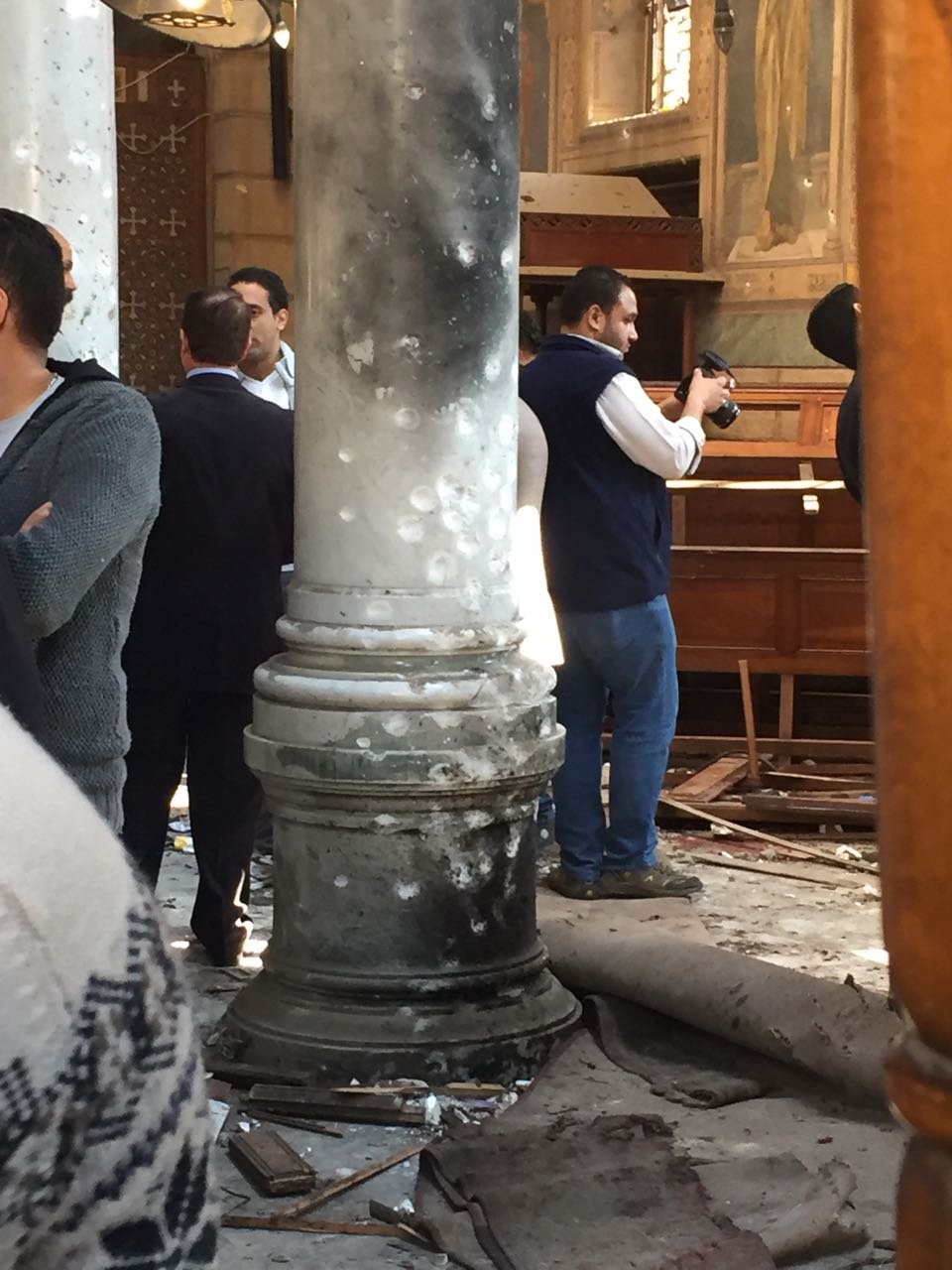
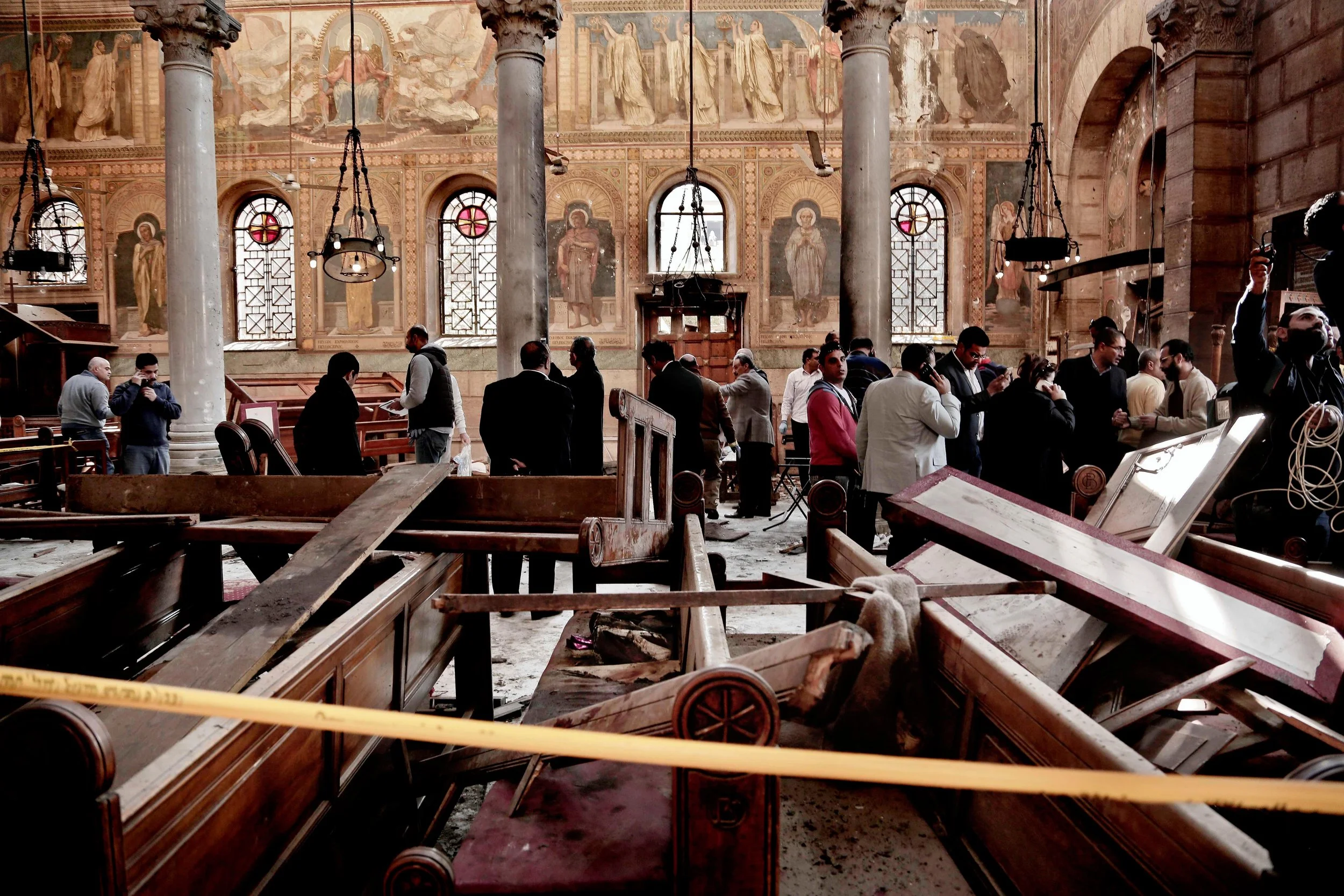
Aftermath of El-Boutroseya church bombing in 2016, that killed 29 people.
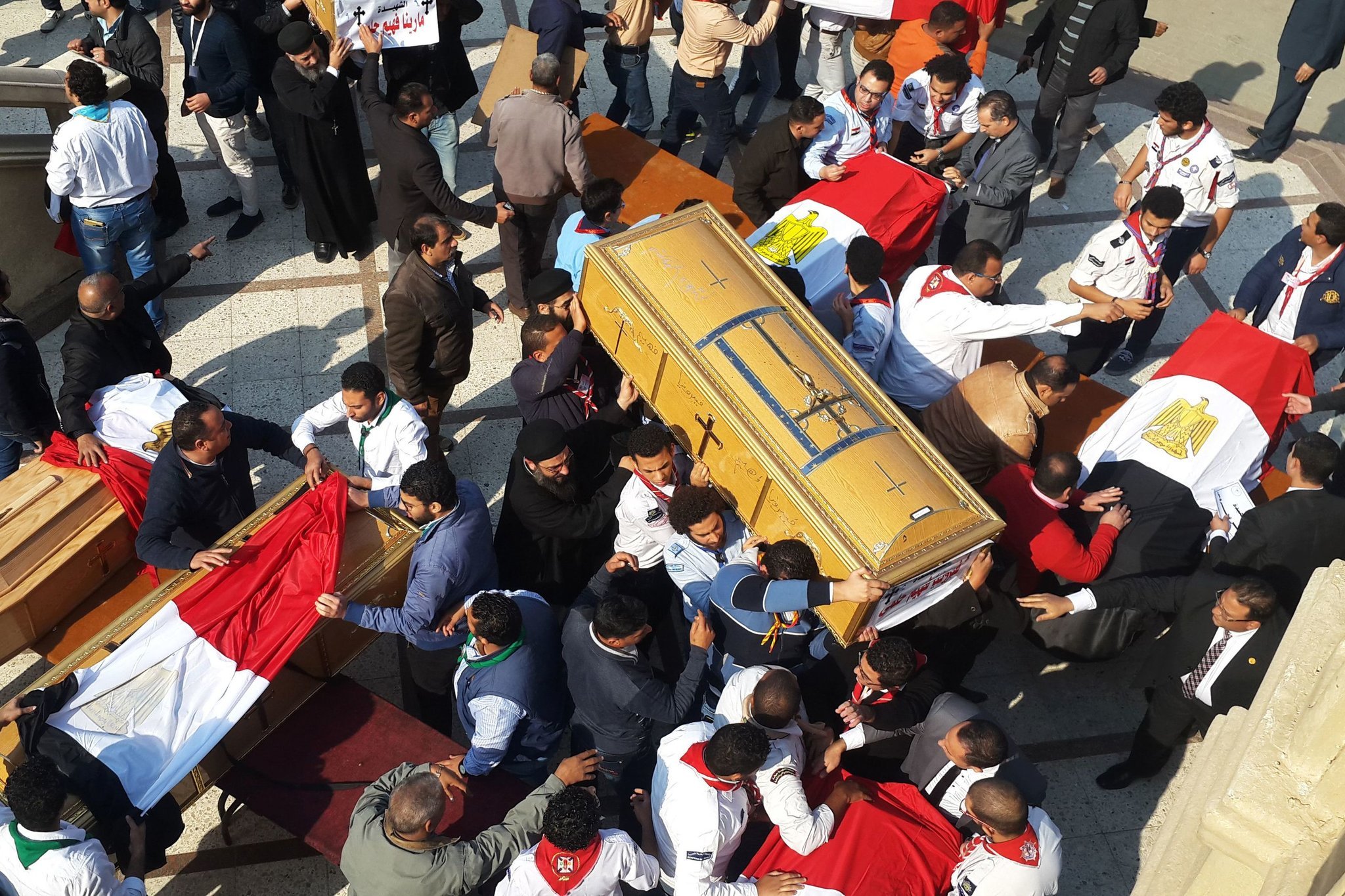
Funeral of the martyrs from church bombing
To be Coptic is to accept that your existence is an active, visible refusal to bend.
While other nations build their identity on shifting borders and political compromises, we have built ours on the refusal to break.
We do not look back at the Roman lions with nostalgia; we look at the modern world with that same steady gaze.
We have been the target for so long that the devil’s shadow no longer frightens us.
The Coptic Cross Tattoo
The Cross on our wrist is not Art
It is the only tattoo in the world designed to invite trouble.
Historically, our oppressors used the cross to brand us—a literal state-mandated "Dhimmi" stamp etched into the skin to ensure we could never hide our identity from the tax collector or the executioner.
It was intended to be a badge of social death, a permanent scarlet letter that marked us as expendable, second-class property.
But the Coptic spirit does not know how to be a victim. We took their mark of prejudice and reclaimed it as a badge of honor.
Coptic parents turned that mark of humiliation into an unbreakable vow: tattooing it on their children’s wrists, even infants, so that if families were torn apart, children kidnapped, or parents martyred, the child would forever bear the truth:
‘I belong to Christ.’
They intended it as a brand of slavery; we wear it as a signature of sovereignty.
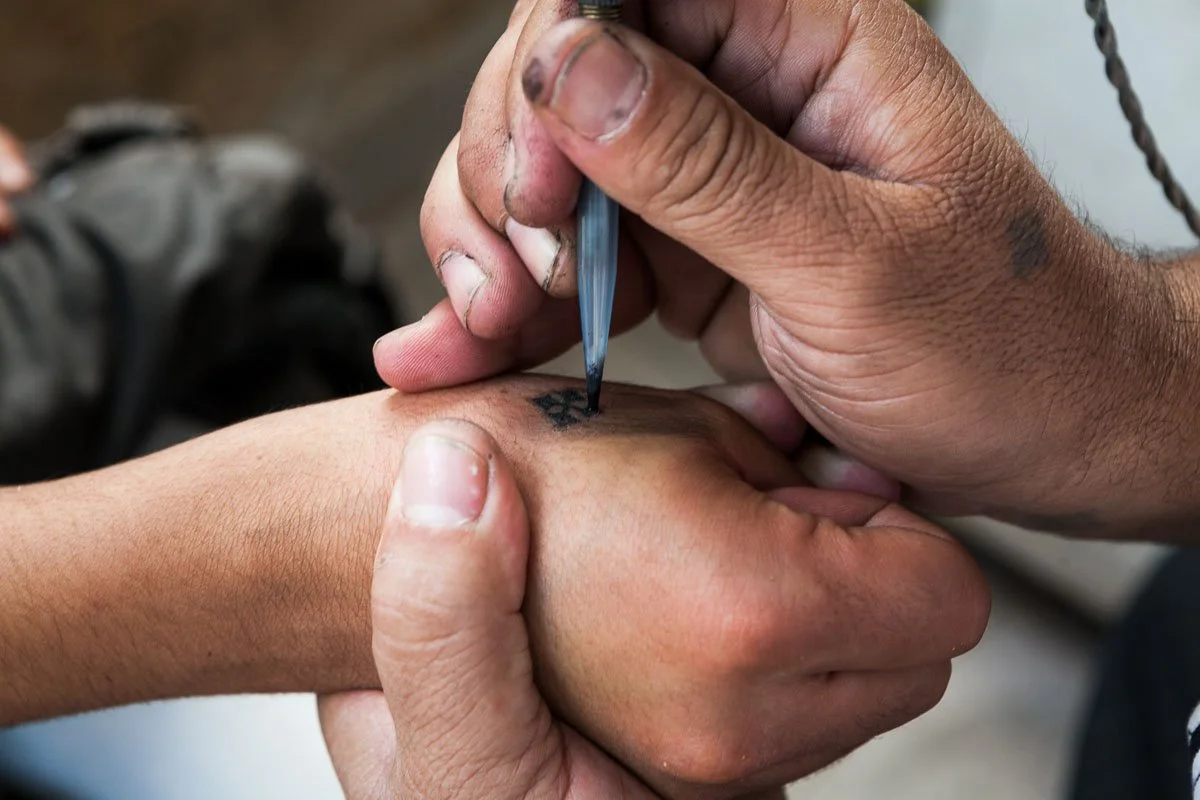
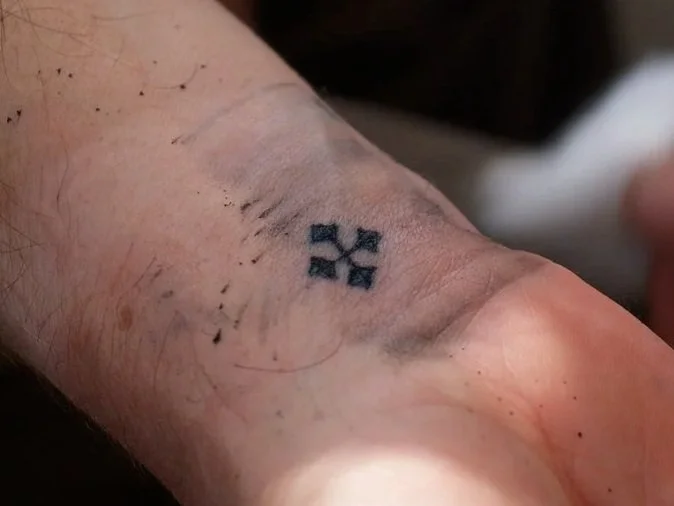
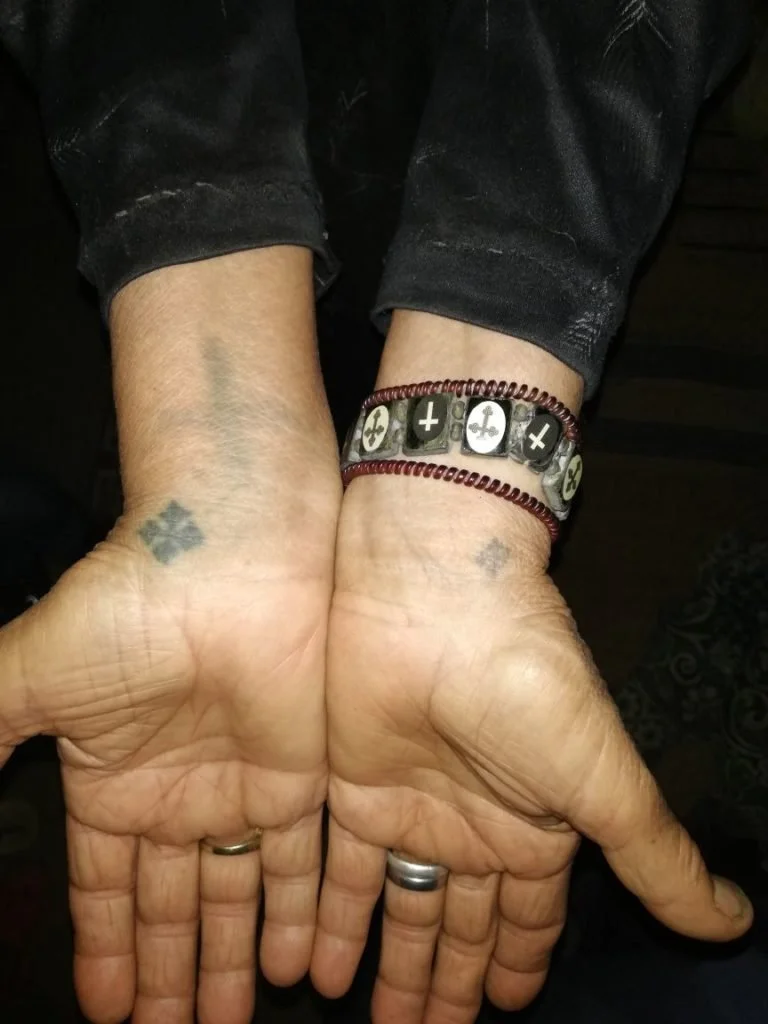
An elderly woman from Upper Egypt with two cross tattoos.
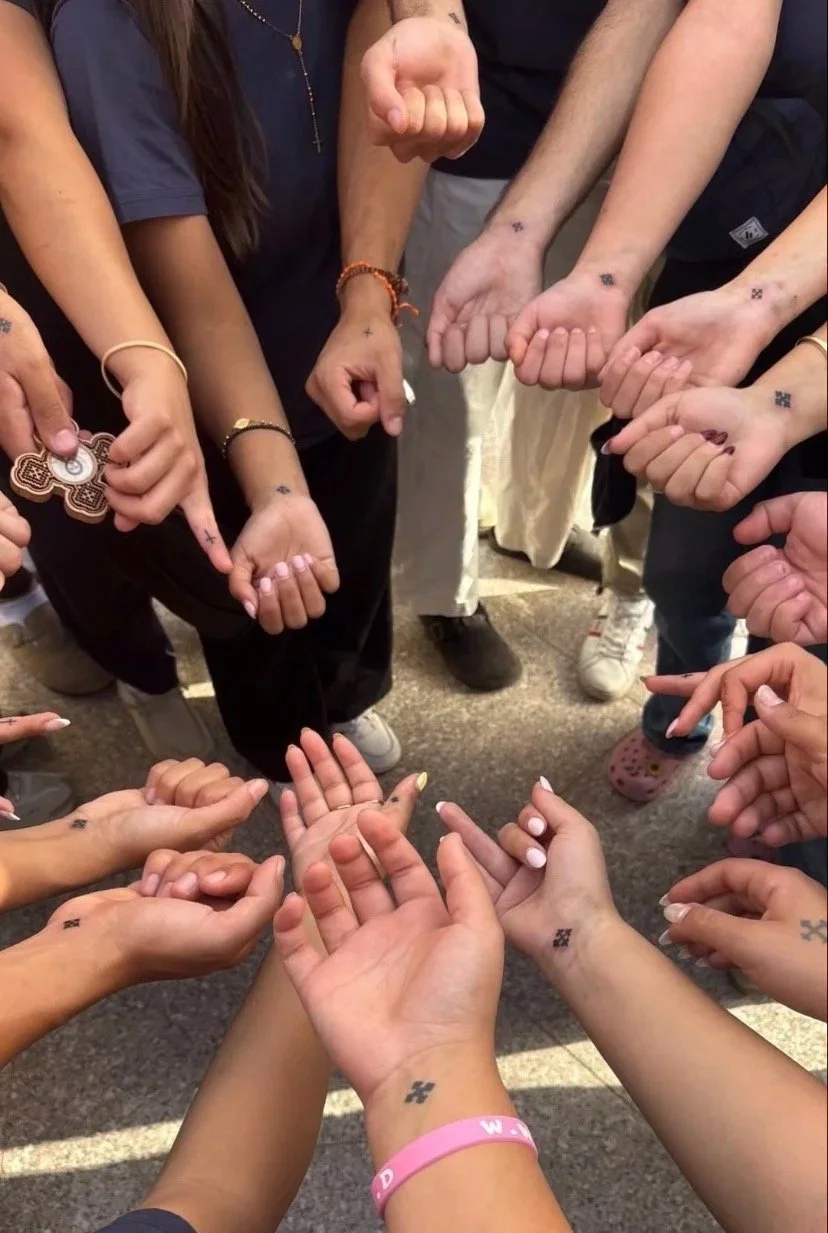
Coptic youth from Sydney show us their Cross tattoo.
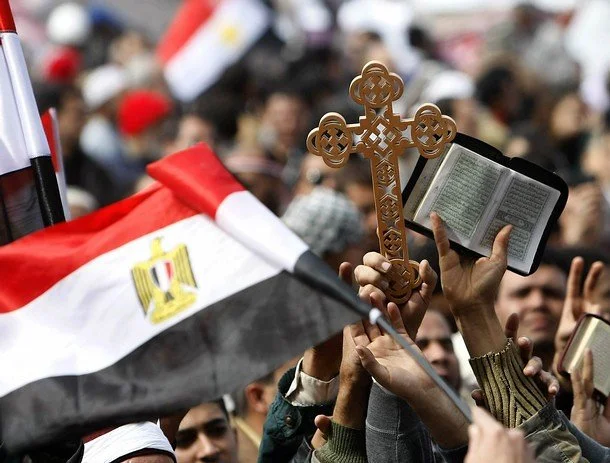
Standing as the indigenous heartbeat of Egypt even through civil unrest.
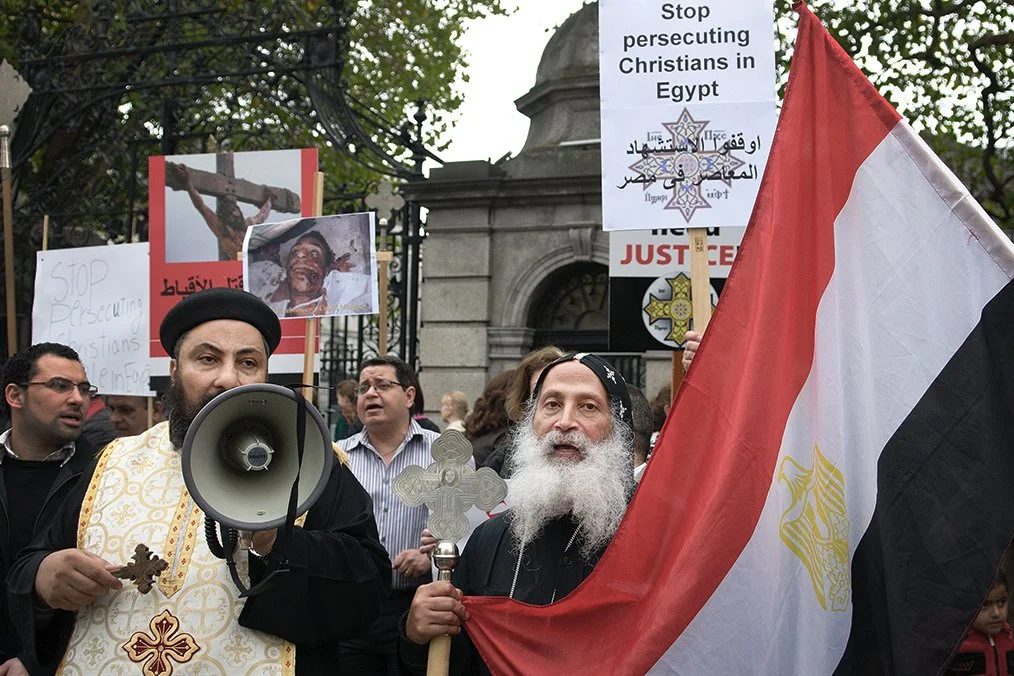
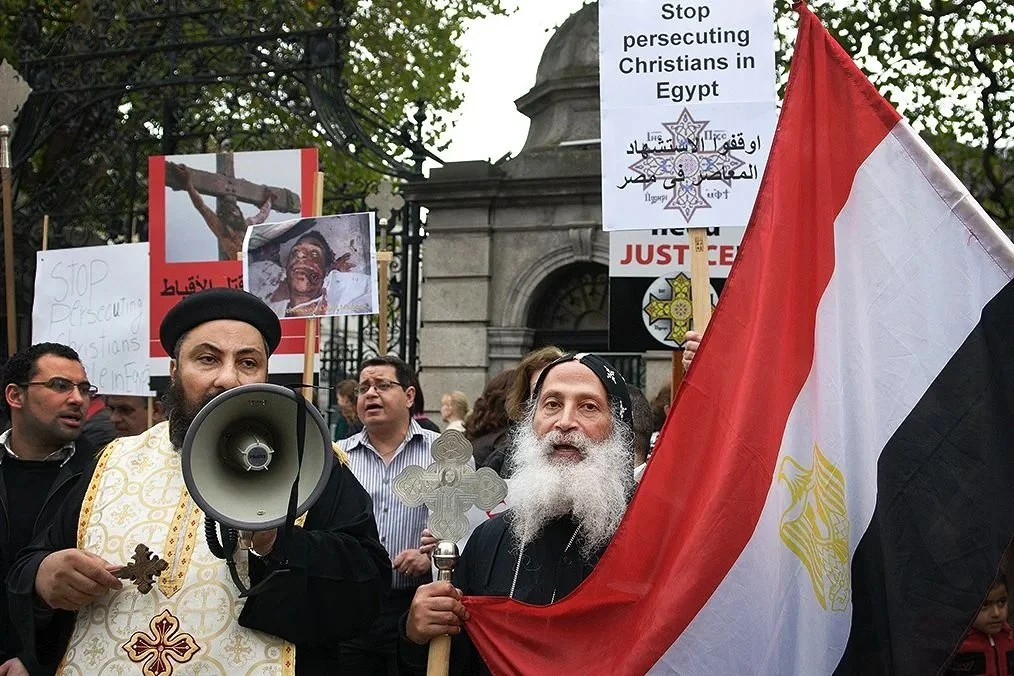
Protests abroad demanding Coptic rights.
The Four Failed Strategies of Erasure
I. The Roman Industrial Slaughter (68 AD – 313 AD)
The War on the Name
The Crime: Rome brought the full, bureaucratic machinery of a global empire to crush a single city of faith. They turned the arena into a theater of public slaughter, thinking the sight of torn flesh would make us kneel.
The Indictment: They mistook our meekness for weakness. We greeted their lions with liturgical hymns and turned their own executioners into converts.
The Failure: Rome is a pile of ruins tourist buy tickets to see. The Coptic Church is a living Nation.
II. The Byzantine Judas (451 AD – 641 AD)
The Imperial Mask
The Crime: The Roman sword was honest; the Byzantine spear was a betrayal by those who called themselves brothers.
When we refused to bow to an Imperial Creed at Chalcedon, they seized our cathedrals, exiled our Patriarchs, and used state terror to try and replace the Coptic heart with a Greek political mask.
The Indictment: They believed church walls and imperial titles equaled spiritual authority.
We proved them wrong by abandoning their state-controlled buildings and fleeing to the desert caves, keeping Orthodoxy pure in the sand.
The Failure: Their empire vanished into the history books. Our liturgy remains completely untouched.
III. The Economic Strangulation (641 AD – 1800s)
The Millennium of the Tribute
The Crime: A new empire brought a slower, more sinister weapon: calculated financial and cultural erasure.
They taxed our very breath through the crushing Jizya, banned our language from the streets on pain of having tongues cut out, and used economic leverage to price us out of existence.
The Indictment: They thought identity could be bought, sold, or starved out.
They waited for a thousand years for the Coptic flame to flicker out under the weight of the ledger.
The Failure: The Coptic tongue survived in the secret, defiant whispers of the Liturgy. We outlasted the Caliphates.
IV. The New Arena (20th Century – PRESENT)
The Systemic Shadow
The Crime: The technology changed. The obsession did not.
Military vehicles drove over protesters at Maspero.
Suicide vests detonated inside churches while families held palm fronds.
21 men were lined up on a Libyan beach and given one final chance to deny their Lord. Each one refused.
The Indictment: They still think that by killing twenty-one men, they can terrify twenty-one million.
They completely misunderstand the physics of the Church.
The Failure: Every drop of martyr's blood is a seed. The Unbroken are now stronger than any point in first century.
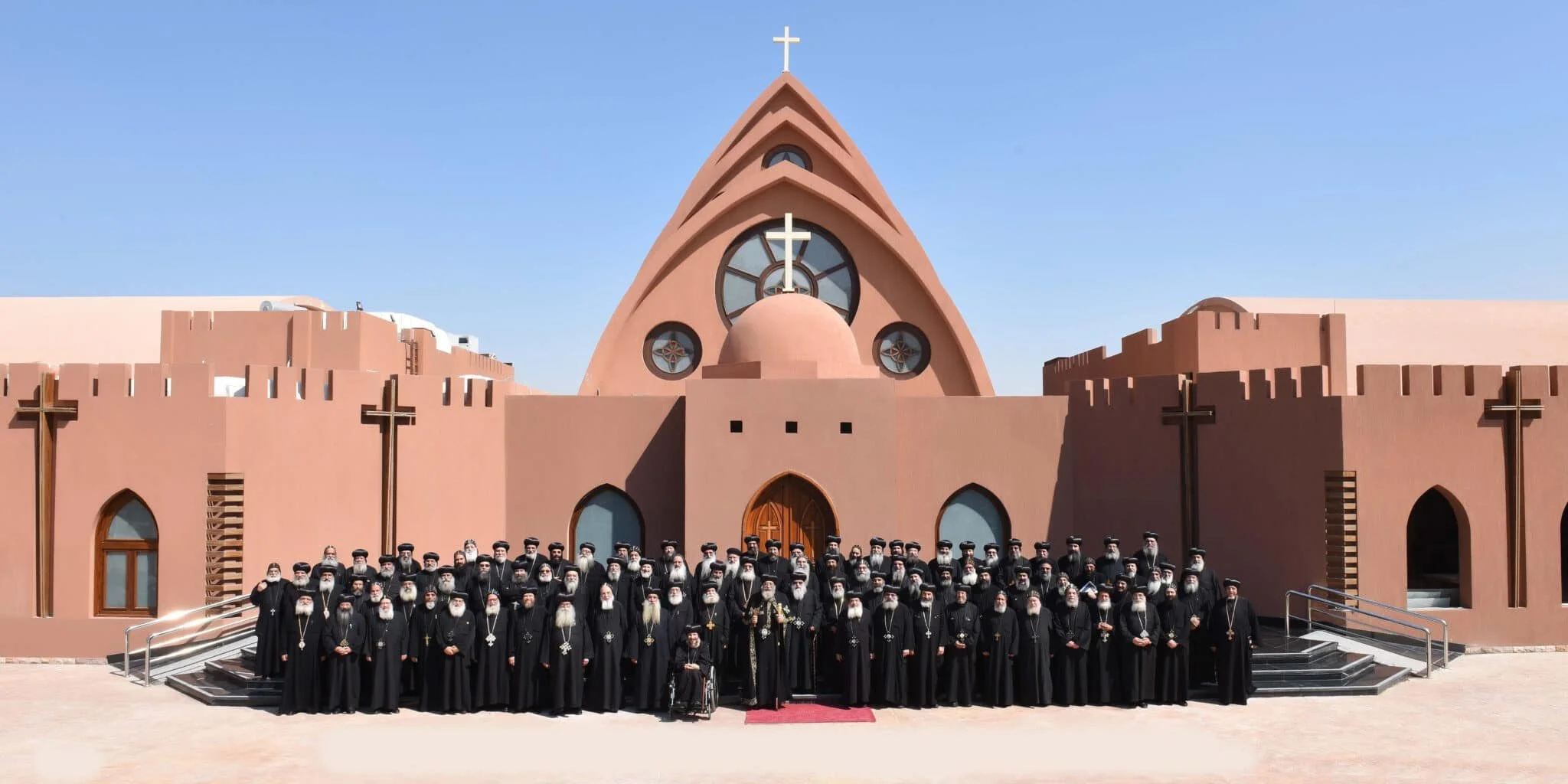
They know nothing but how to hate us. We know nothing but how to outlive them.

Unfiltered, Documented Proof.
The Evidence Vault
This is the ledger of the modern front.
We do not catalog these events to solicit the world's grief or beg for political intervention.
This is a public court record of the ongoing campaign to break the Anvil—and the empirical proof that the line remains unbroken.
The Hostile ActDate & LocationISIS extremists execute 21 Coptic workers on a beach, filming it to broadcast global terror.
February 2015Sirte, Libya
The Coptic ResponseThe men die with the name of Christ on their lips. The Church instantly canonizes them, building a massive cathedral in their home village. The orange jumpsuit is permanently converted into an icon of victory.
A suicide bomber strikes the ladies' section during Sunday Liturgy, killing 29 faithful.
Within hours, the youth gather outside the blood-stained walls, chanting the ancient resurrection hymns. The parish refuses to miss a single subsequent liturgy.
December 2016El-Boutroseya, Cairo
Palm Sunday suicide bombings target St. Mark’s Cathedral and St. George’s, killing 45+.
April 2017Alexandria & Tanta
The global Coptic community responds with record-breaking attendance at Holy Week services days later. The families of the deceased publicly forgive the perpetrators on national television, breaking the psychological leverage of the attackers.
Systemic bureaucratic blockades, targeted abductions of women, and mob violence aimed at halting church construction.
The remnant adapts. Under conditions where a brick wall requires a miracle of state paperwork, communities continue to gather in roofs, fields, and alleyways—proving that the Church is built of living stones, not government permits.
Ongoing...Upper Egypt Villages
An Unbroken Scroll
The Synaxarium
The world tries to split our history in two. They want to place our saints in a safe, distant past and view our modern struggles as a localized political crisis. They are wrong.
The Evidence Vault is not a modern news feed. It is the active, wet ink of the Synaxarium.
The 21 men on the shores of Libya did not die as casualties of a modern geopolitical conflict—they stepped directly into the Calendar of the Crowned alongside Saints and Martyrs.
The women of El-Boutroseya took their place next to the mothers of Alexandria.
We do not archive today's pressures to keep a news cycle moving.
We archive them because the Eternal Record is still open, and our generation is currently writing its chapter.
The Conduit
From Tragedy to Liturgy
To show how the present instantly becomes part of our timeless identity, we map the trajectory of a witness through a clean, sharp progression:
1. The Event (The Vault)
A localized flashpoint of pressure occurs in real-time—a church targeted, a life taken, a compromise refused. To the secular world, it is a tragedy reported on a screen.
2. The Liturgical Absorption
The Church does not wait centuries to validate its heroes. Within months, the names of the modern witnesses are spoken by the priest at the altar during the Diptych (the remembrance of the saints). The blood spilled on Monday becomes part of the bread offered on Sunday.
3. The Synaxarium (An Eternal Record)
The account is officially inked into the Synaxarium. When the page for 16 Amshir or 8 Meshir is read aloud to the diaspora in Sydney, New York, or London, the ancient martyrs and the modern laborers are read in the exact same breath.
We do not close the book because our history is still being written.
The Synaxarium is a living, breathing document.
The same ink used to record the trials under Diocletian is being used right now in 2026 to write the names of those who refuse to hide the cross on their wrist.
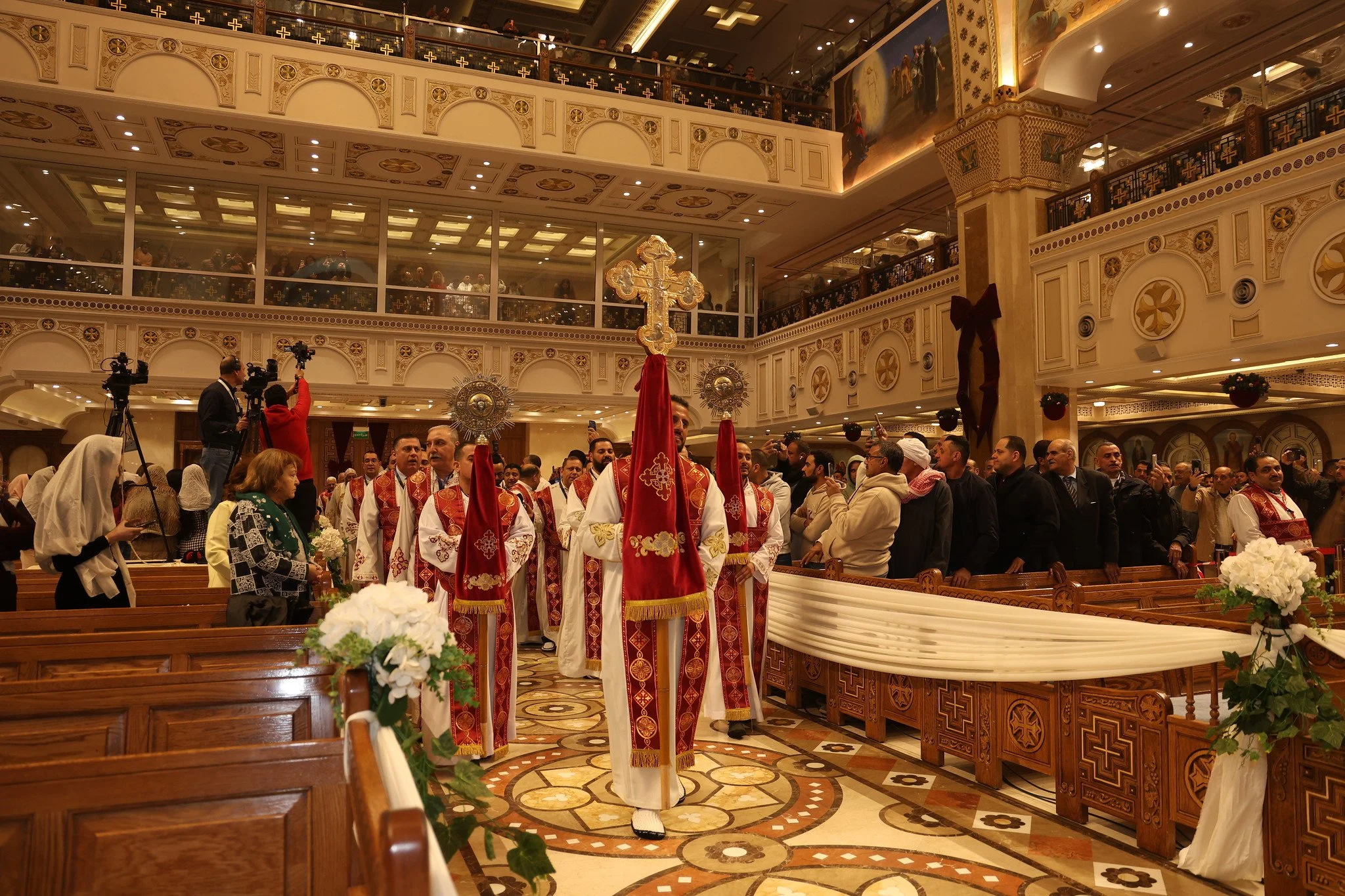
The Diaspora
An Identity Without Borders
We did not leave our foundations in Egypt. We planted them in every city on earth.
The Coptic diaspora is not a community dissolved by assimilation.
We are an international network of the unbroken — and we are the continuation of the same line that endured Rome, survived the desert, outlasted the Caliphates, and answered a Libyan beach with a cathedral.
You did not find this page by accident.
You are part of the same unbroken line.
You always were.